Willa Weber · 2 September 2026
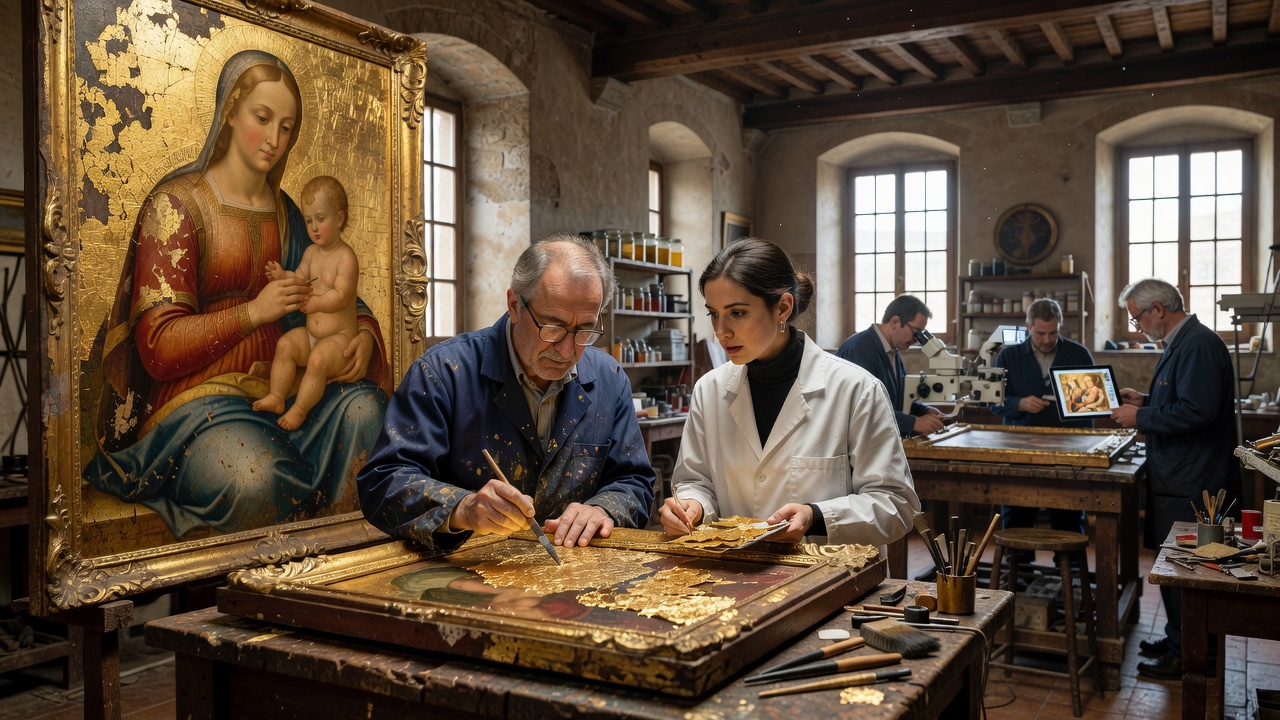
Art restorers in Florence are increasingly turning to advanced gilding techniques to preserve the city's rich artistic heritage. These methods combine traditional craftsmanship with modern technology, allowing for more precise and durable applications of gold leaf on historic artworks and architectural elements. The shift comes as many Renaissance pieces show signs of wear from centuries of exposure.
Emerging Techniques in Gilding
One of the key innovations involves the use of nano-particle gold solutions that adhere better to aged surfaces. Restorers at the Opificio delle Pietre Dure have reported success with these solutions on 15th-century panels. Additionally, digital mapping tools help identify areas requiring restoration without damaging original materials. This approach minimizes the risk of over-gilding, which was a common issue in past projects. Workshops in the Santa Croce district are training young artisans in these hybrid methods. The curriculum includes both manual leaf application and the use of electrostatic sprayers for even coverage on large surfaces like altarpieces. Conservationists note that these tools reduce labor time significantly while improving quality. Laser scanning now allows restorers to create three-dimensional models before applying gold leaf, ensuring uniformity across intricate carvings and frames.
Preservation Benefits and Challenges
The new techniques offer enhanced longevity, with some treatments lasting up to 50 years longer than conventional ones. Environmental factors such as humidity in Florence's climate are better managed through climate-responsive coatings applied over the gold leaf. However, experts caution that these methods must be carefully tested to avoid altering the aesthetic value of the pieces. Collaborations between Italian institutions and international universities have accelerated the adoption of these practices. For instance, a recent project at the Basilica di San Lorenzo utilized laser ablation to remove old varnish before re-gilding, resulting in a more authentic finish. Funding from the European Union supports ongoing research into eco-friendly gilding materials that reduce the use of toxic solvents. Local authorities are also implementing stricter guidelines for restoration projects to ensure consistency across sites. These developments highlight Florence's commitment to maintaining its status as a center of art conservation excellence. Ongoing trials continue to refine application processes for both indoor sculptures and outdoor monuments exposed to pollution.