Willa Weber · 2 September 2026
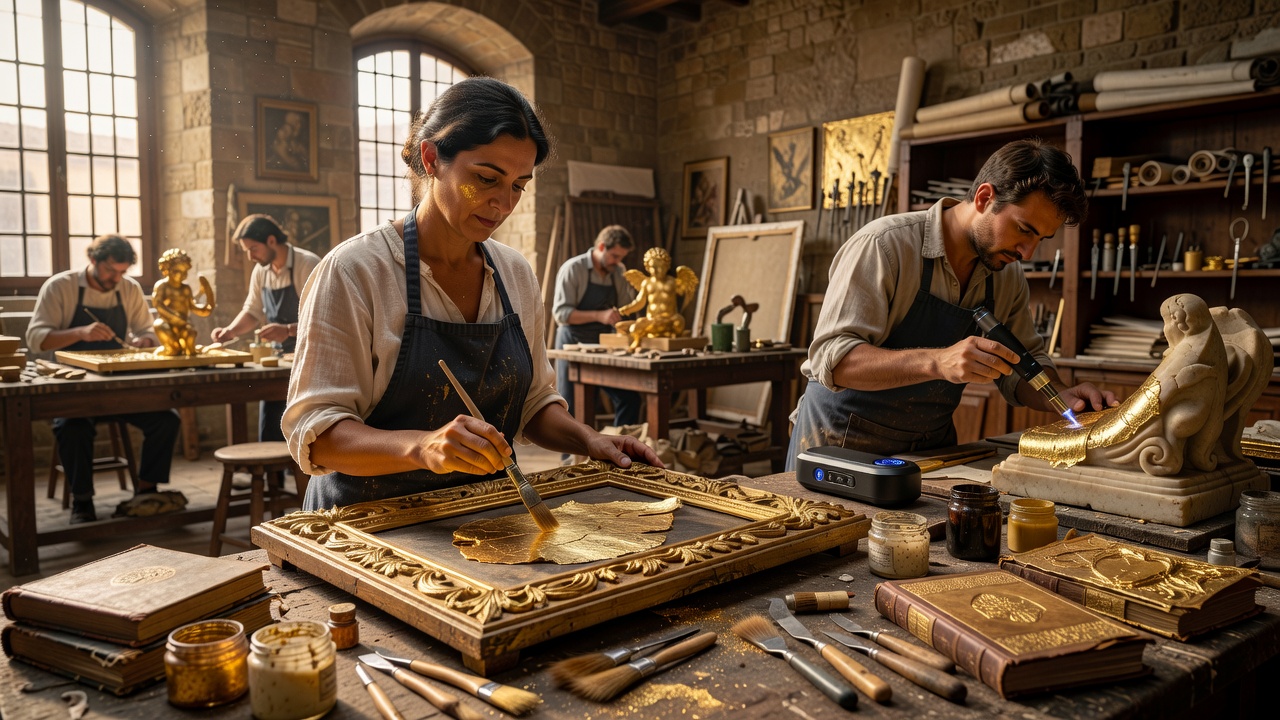
Art restorers in Florence are integrating advanced gilding techniques to better preserve Renaissance masterpieces and other historical artifacts. Workshops across the city report improved adhesion, reduced material waste, and enhanced longevity for gold-leaf applications on frames, altarpieces, and decorative elements.
Advances in Materials and Application
Traditional water gilding and oil gilding methods are being supplemented by hybrid approaches that combine natural bole with synthetic stabilizers. These stabilizers allow restorers to work in varying humidity levels common to Florence’s climate without risking cracking or flaking. Laser-assisted surface preparation now removes old varnish and dirt layers more precisely than mechanical cleaning, creating a smoother substrate for new gold leaf. Conservators also employ micro-thin gold alloys that require less precious metal while maintaining visual authenticity under gallery lighting. Training programs at institutions such as the Opificio delle Pietre Dure have incorporated these protocols into certification courses, ensuring standardized practices across public and private studios.
Impact on Historical Artifacts
Recent projects at the Uffizi Gallery and Santa Croce demonstrate measurable benefits. Restorers working on 16th-century wooden frames reported a 40 percent reduction in re-treatment needs after five years using the new techniques. Environmental assessments show lower solvent emissions compared with older oil-based mordants. Collaboration with materials scientists from the University of Florence has produced accelerated aging tests confirming that the updated adhesives resist oxidation for decades longer than previous formulations. While purists express concern over any departure from purely historical recipes, most professionals view the changes as necessary adaptations that protect cultural heritage for future generations. Ongoing documentation and peer-reviewed publications are expected to guide similar workshops throughout Italy and Europe.